The Small Collection That Starts a Lasting Pastime
Start a lasting pastime with a small collection: turn an existing interest and spare materials into a repeatable activity without a shopping spree.
A lasting pastime often begins with one modest collection, not a cart full of supplies. To start a lasting pastime, choose an interest you already notice, make one small thing with materials on hand, then decide what would make you want to return to it.
That approach suits a weekend with uncertain energy and a firm budget. It also gives the pastime room to reveal what it actually requires, rather than what a polished hobby aisle suggests it requires.
A curious eye becomes a starting point
Imagine Mara, who keeps pausing to look at leaves on her neighborhood walks. She likes their shapes and the way their colors change, but she has no wish to turn Saturday into a botany course. Her interest is specific enough to begin with: noticing and comparing leaf forms.
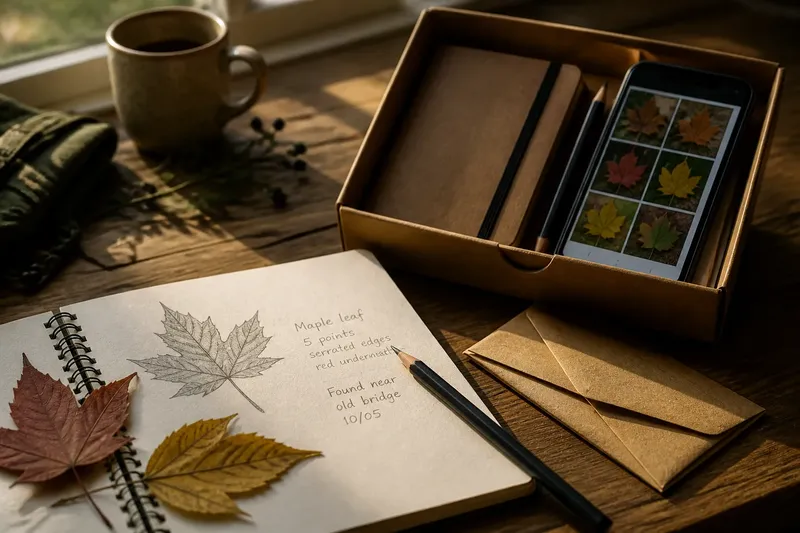
She checks what is already at home. There is a used notebook, a pencil, a few envelopes, and a phone with a camera. Rather than buy a field guide, a magnifier, and an archival journal, she chooses one first activity: collect visual notes from a short walk.
This is not a test of commitment. It is a way to find out which part of the interest holds her attention. She might enjoy searching for shapes, drawing them, sorting photographs, or simply having a reason to look more closely. The first activity should be small enough that the answer can emerge without a large setup.
One activity sets the size of the collection
Mara takes the notebook and pencil to a nearby park. She sketches a few fallen leaves and writes brief notes about their edges and veins. She leaves the leaves where they are. The walk has a clear purpose, but it still fits into an ordinary afternoon.
Back home, she puts the notebook and pencil together in a shallow box. That is her initial collection. The box matters less as storage than as a visible invitation: next time, she can begin without hunting through drawers. She adds no decorative supplies, specialist tools, or materials for activities she has not tried.
A useful first collection usually contains the objects needed to do one repeatable version of the pastime. For sketching, that might be a pencil, paper, and a way to keep the work together. For mending, it might be a needle, thread, and a garment with a loose button. For birdwatching, it might be a notebook and a place to observe from; binoculars can wait until observation itself proves appealing.
The right materials depend on the activity. If a product label, maker’s instructions, or local rules apply, follow them; for ordinary paper-and-pencil nature notes, Mara needs no special equipment.
A second visit reveals what to keep
A few days later, Mara returns to the same park with her small box’s contents. This time, she spends less effort deciding what to bring and more time noticing. She makes a closer drawing of one leaf and writes down where she saw it. The activity feels familiar enough to resume, but open enough to offer a new detail.
Say Mara discovers that drawing is frustrating, while comparing shapes is satisfying. She could switch to quick phone photographs and arrange them in a simple album, keeping the notebook for captions. The observable result would be a small set of images she can compare on another walk, not a claim that she has uncovered a profound new identity. A pastime can be worthwhile at the scale of an enjoyable repeat.
After that second outing, she reviews the materials by asking what she reached for and what stayed unused. She keeps the notebook and pencil accessible. She does not buy a magnifier merely because it might be useful someday. If repeated observations make fine details interesting, she can consider one then.
Growth follows a real need
A collection can grow in response to a recurring obstacle. If Mara cannot read her own small sketches, a broader pencil or a larger notebook might help. If she wants to compare the same spot across visits, a dated page or a simple photo album may be enough. Each addition solves a problem she has encountered, rather than an imagined future version of the pastime.
This keeps the activity flexible across schedules and budgets. On a busy weekend, Mara can add one observation near home. On a freer afternoon, she can take a longer walk and make several notes. The collection supports both versions without requiring a reserved block of time or a fresh purchase each time she participates.
It also keeps the pastime from becoming a storage project. Materials that serve no chosen activity tend to create decisions before the activity even begins. A small, coherent set makes the starting point obvious and leaves space to change direction.
What should you ask before adding more?
How do I choose an interest?
Notice what you already look at, talk about, collect informally, or return to during an ordinary week. Choose a narrow activity connected to that interest, such as drawing one object or sorting a few photographs, rather than trying to define a whole new hobby.
What if I do not own the right materials?
First identify the simplest version of the activity, then check drawers, a desk, or household leftovers for materials that can serve it. If an essential item is missing, borrow it or postpone that version until you can obtain it without straining your budget.
How can I tell whether the pastime suits me?
Notice whether you want to return to the activity, which part holds your attention, and what makes starting difficult. One pleasant attempt is a useful clue, not a contract; another try can clarify whether you prefer a different format.
When should I buy a specialized tool?
Wait until the same limitation appears more than once and a particular tool would address it. Compare the tool’s actual purpose with what you already use, then decide whether borrowing or a secondhand option is sensible.
A useful pastime stays easy to resume
Mara’s collection remains a notebook, a pencil, and a camera she already owns. Its success is not measured by how quickly it expands. The useful sign is that she can pick it up again, remember what she was curious about, and make a small addition without rebuilding the plan.
To start a lasting pastime, let the first collection be a record of what you actually do. Keep the materials together, repeat the activity when it fits, and add only what the next attempt makes necessary. A modest beginning is not a temporary version of the real thing; it can be the form that makes returning possible.