A Rainy Saturday at Home, Planned in Three Easy Blocks
Plan a rainy Saturday at home with three flexible blocks: a hands-on task, real rest and a shared activity that needs little more than what you own.
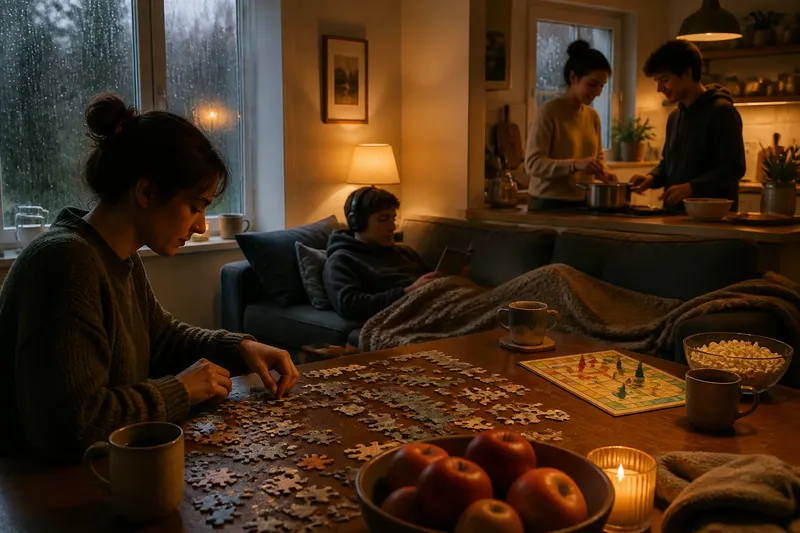
A rainy Saturday at home works best when its plans have different jobs: one block uses your hands, one lets your attention settle, and one brings people together. The trouble is that indoor plans often blur into an ambitious chore list, a day of scrolling, or a string of activities nobody agreed to do.
Keep the three blocks distinct and modest. You do not need a schedule packed to the edges, a special craft kit, or a household vote on every small decision. You need a starting point for each part of the day and permission to adjust when the weather is doing what weather does.
The hands-on block turns into a list of chores
Rain can make home tasks look unusually tempting. The windows are gray, the floor is visible, and suddenly the Saturday plan includes sorting a closet, cleaning the fridge and reorganizing a cabinet. That is how a hands-on block becomes unpaid facilities management.
The usual cause is choosing a task by area rather than by finish. “Fix the kitchen” has no natural stopping point. “Make a batch of soup” or “repair the loose button on the coat” does. Pick one project that leaves a visible result and does not depend on a long shopping trip.
Choose from materials already at home: scrap paper and markers for making cards, a wooden spoon and pantry ingredients for a simple recipe, or a needle and thread for a small mending job. Put the needed supplies in one place before beginning. Leave any task involving tools or household systems beyond your experience for another day, and follow product instructions where they apply.
Say you have an unfinished jigsaw puzzle on the dining table and a bag of apples in the kitchen. You could choose the puzzle as the hands-on block, clear enough table space to work, and aim to sort the edge pieces rather than finish the whole thing. The expected result is a more inviting puzzle and a task with a clear endpoint, not a heroic transformation of the house.
If the project starts sprawling, stop at its chosen endpoint. Put away materials that could be damaged or become clutter, then leave the rest for another occasion. A block earns its place by being satisfying to begin and straightforward to end.
The restful block gets swallowed by errands and screens
“Rest” can sound vague, so it is easy to fill the gap with errands, messages and one more small task. The block passes, but nobody feels rested. A phone can also turn a quiet hour into a tour of other people’s plans.
Give rest a simple shape without turning it into another assignment. Read a few chapters, listen to an album, take a nap, sit by a window with tea, or watch a film you have already chosen. Put the book, blanket or headphones within reach before the block starts. If you plan to use a screen, decide what you are watching rather than browsing until the weather improves out of pity.
Rest need not mean everyone in the home does the same thing. One person can read while another listens to music through headphones. If a household has different needs for quiet, agree on a low-noise stretch or choose separate rooms where possible. The point is to reduce demands, not to stage a silent retreat beside the laundry basket.
When unfinished tasks intrude, write them on a note and return to the chosen activity. This gives the thought somewhere to go without granting it the whole afternoon. If you are genuinely tired, make the restful block longer and let the shared one be simpler.
The shared block feels like forced togetherness
A shared activity can fall flat when it is chosen for its symbolic value rather than because anyone wants to do it. “We should spend quality time together” is not an activity; it is a request wearing a cardigan. The fix is to offer a small menu and let people opt into a manageable plan.
Try a board game already on the shelf, a family recipe, a playlist each person adds one song to, or a film with a bowl of popcorn. These choices use ordinary household supplies and give the group something specific to do. For younger children, a paper-and-crayon drawing prompt can work; for adults, making lunch together may be enough.
Set a loose start and an obvious stopping point. A game ends when the round ends; a shared meal ends when the table is cleared. Avoid assigning one person all the preparation and cleanup if the activity is meant to feel shared. A modest division of tasks is more convincing than a speech about cooperation.
Imagine two housemates who want company but have different energy levels. They could agree to make grilled cheese and tomato soup, with one handling the stove and the other setting out bowls, then eat together without adding a second activity. The expected result is time spent in the same room with a natural endpoint, rather than a full-day commitment either person has to escape.
The blocks collide with different schedules
Household members may wake, eat or need quiet at different times. A rigid timetable can make the plan feel broken before anyone has started. Use order rather than exact clock times: hands-on first, rest next, shared time later, with gaps left open for meals and personal obligations.
If someone cannot join the shared block, do not make participation the test of whether the day worked. Let them take part in a piece of it, such as choosing the film or setting aside a portion of the meal. A plan that survives one person’s appointment is more useful than a perfect schedule that depends on everyone being free.
Keep the blocks short enough to move. If the hands-on project takes longer than expected, finish at a natural stopping point and protect some rest rather than pushing every later activity into the evening. If a shared plan loses its audience, scale it down or postpone it without turning the change into a household referendum.
What should each block include?
How long should a rainy Saturday block last?
Use a span that fits the activity and the people involved rather than assigning every block the same length. A puzzle may be easy to leave and resume, while cooking needs enough time to prepare and eat.
What can you do at home without buying supplies?
Use what is already available: a library book, a deck of cards, pantry ingredients, a repair that needs basic sewing, or paper for drawing. Choose an activity whose missing materials will not turn into a shopping errand.
What if someone does not want to join?
Offer a specific invitation and a low-pressure way to participate, then let them decline. They might choose the film, join for the meal, or spend the block doing something else nearby.
What if the day changes halfway through?
Keep the block’s purpose and change its format. A shared meal can replace a game, or a quiet audiobook can replace reading if concentration is low.
Keep the plan small enough to use
Before the rain sets in, choose one hands-on activity, one restful option and one shared plan. Write them on a scrap of paper, along with any supplies to set out, then leave room between them. The list is a prompt, not a contract signed in damp ink.
A rainy Saturday at home does not need to produce a finished project or a memorable family story. Its useful measure is simpler: something was made or tended, someone had a chance to pause, and people shared a piece of the day without having to perform enthusiasm. Keep one easy activity in reserve for the next wet afternoon, and let the rest of the house remain as it is.